PuppyView sample
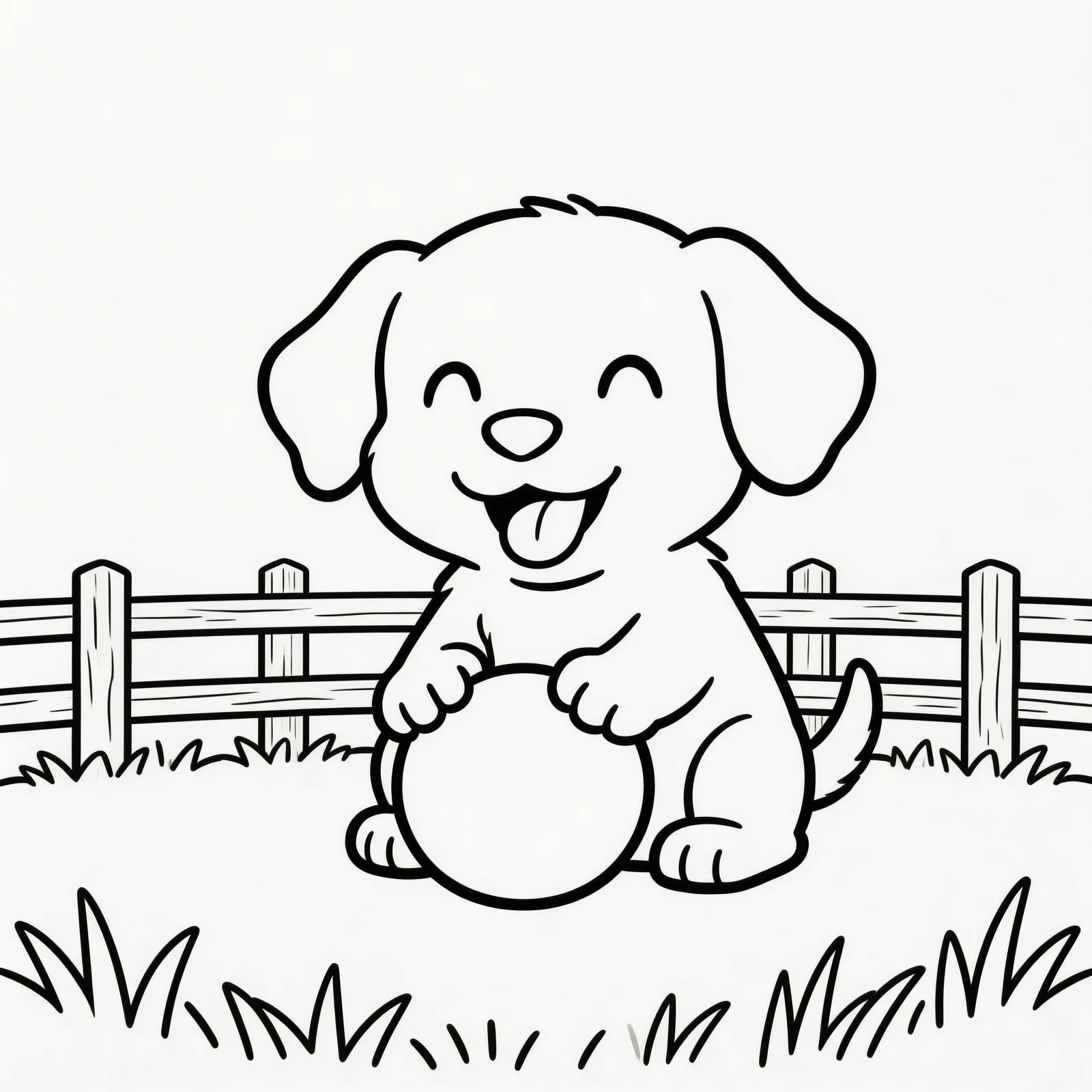
Puppy with ball
A friendly smiling puppy with a ball on simple grass, bold clean outlines, simple printable coloring page.
Best first dog page

The best dog coloring pages stay friendly and simple — one happy puppy, one playful prop, and one cozy setting. That formula gives you clean printable lines kids can color without getting frustrated.
Keep your puppy large and centered with bold outlines. Avoid busy pet park scenes — a simple yard or dog bed is enough background.
A good printable page should be easy to understand before a child picks up a crayon. Use the sample as a quality target, copy the prompt style, generate a similar page, then print the PNG on normal paper.
A friendly smiling puppy with a ball on simple grass, bold clean outlines, simple printable coloring page
Dog pages that print well follow a simple pattern: one puppy or dog as the star, one calm setting that doesn't compete for attention, and one prop that gives the page personality without clutter.
One puppy, a happy floppy-eared dog, a sleepy dog curled up, or a mama dog with one puppy.
Grass patch, sunny yard, dog bed, doghouse, simple fence, or one cozy rug.
Ball, bone, food bowl, tiny bow, leash, butterfly nearby, or a single chew toy.
If the dog page looks too busy, remove the background first and keep just the puppy and its prop. Realistic fur textures can also be simplified — smooth outlines usually print better for younger kids.
Keep browsing nearby themes, or use a generator when you need a custom version.
Dog and puppy pages perform best when the dog stays large, friendly, and easy to color. Use these samples to pick a printable direction before generating your own pet, classroom, or breed-style page.
A friendly smiling puppy with a ball on simple grass, bold clean outlines, simple printable coloring page.
Best first dog page
A very simple big puppy with one bone, extra thick outlines, no background, toddler coloring page.
Ages 2-4
Upload a clear dog photo with one main subject, then convert it into a clean printable line drawing.
Good for custom pets
Printable Dog Page Paths
Use this dog page when you want a quick printable puppy sheet. Use the custom tools when you want a specific breed, a classroom pet activity, or a coloring page from your own dog photo.
Dog, Puppy, Breed
Dog coloring page searches usually split into a simple dog, a cute puppy, a specific breed, or a playful dog scene. Pick the closest direction first, then keep the printable page simple enough to finish.
By Age Group
Pick the right difficulty so your kid stays engaged and proud of the finished page.
Easy (Ages 2-4)
One large puppy with thick bold outlines. No background details. Think: a single sitting puppy with a ball — nothing else. Big open areas for chunky crayons.
Medium (Ages 5-7)
A puppy with one prop and a simple scene. Regular line thickness. Example: a dog in a yard with a ball and one fence.
Hard (Ages 8-12)
A detailed dog scene with fur texture, patterns, and a richer environment. Example: a dog at a park with trees, a bench, and butterflies.
Tips
Keep the puppy big. Fill at least 60% of the page with the dog itself. Small dogs surrounded by scenery frustrate younger colorers because the spaces get too tight.
Skip realistic fur for ages under 6. Realistic textures create lines too close together for little hands. Use smooth outlines and let kids imagine the fluffiness with their colors.
One prop is enough. A ball OR a bone OR a bowl — not all three. Every extra object makes the page harder to finish, and unfinished pages kill motivation.
Always add "friendly". Some breeds (German Shepherd, Doberman) can come out fierce. "Friendly puppy with a wagging tail" keeps every dog kid-safe.
FAQ
Are these dog coloring pages free?
Yes — you get 1 free text-to-coloring-page and 1 free photo-to-coloring-page on signup. No credit card required. After that, credit packs start at $4.99 and never expire.
Can I make a coloring page of my own dog from a photo?
Yes. Use our
photo to coloring pagefeature to upload a photo of your dog and turn it into a clean line drawing ready to print.
Can I generate a specific dog breed?
Yes — describe the breed in the prompt (e.g., "a happy golden retriever", "a fluffy poodle puppy"). The AI handles common breed shapes and proportions well.
Can I use these in my classroom?
Yes — teachers use ColorPage AI for pet-themed worksheets, reward pages, and "draw your dog" activities. All content is filtered to be family-friendly and classroom-safe.
Use the theme as a starting point, then make it personal with your child's favorite animal, name, photo, or story idea.